
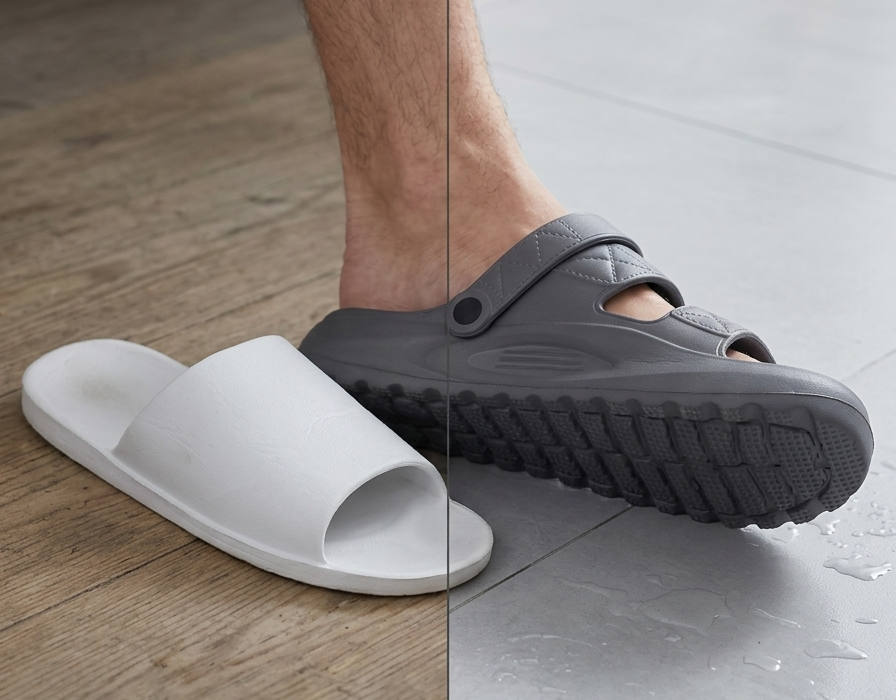
EVA (ethylene-vinyl acetate) has become the material of choice for modern slipper manufacturers, and its dominance in the wholesale market shows no signs of slowing in 2026. But what exactly makes EVA so well-suited for footwear production, and why should wholesale buyers pay attention to this trend?
What Is EVA and Why Does It Matter?
EVA is a copolymer of ethylene and vinyl acetate, a foam-like material that combines the best properties of rubber and plastic. Unlike traditional PVC or rubber slippers, EVA offers a unique balance of lightness, flexibility, and durability that is difficult to match with alternative materials. The global EVA foam market was valued at over $7.5 billion in 2025 and continues to grow at a compound annual growth rate of approximately 6.2%, with footwear representing the largest application segment.
Key Advantages of EVA for Slipper Manufacturing
1. Exceptional Lightweight Properties
EVA slippers typically weigh 30-50% less than comparable PVC or rubber models. For wholesale buyers serving markets where shipping costs are calculated by weight, this translates directly to lower logistics expenses. A standard EVA slipper weighs approximately 120-180 grams per pair, compared to 250-350 grams for rubber alternatives. On a container of 50,000 pairs, the weight savings can reduce sea freight costs by 20-30%.
2. Superior Cushioning and Comfort
The closed-cell foam structure of EVA provides excellent shock absorption, making it ideal for all-day wear. The material compresses under pressure and rebounds quickly, maintaining its cushioning properties through thousands of wear cycles. This is particularly important for markets where consumers wear slippers as primary indoor and outdoor footwear, such as in Southeast Asia, the Middle East, and parts of Africa.
3. Water and Chemical Resistance
EVA is naturally water-resistant and does not degrade when exposed to moisture, making it perfect for bathroom, poolside, and beach use. The material also resists common household chemicals, oils, and UV exposure better than traditional rubber. This durability extends product life and reduces return rates for retailers.
4. Design Flexibility
EVA can be injection-molded into virtually any shape, allowing for innovative designs that would be impossible with traditional materials. From ergonomic footbeds with arch support to decorative strap attachments, the manufacturing flexibility of EVA enables brands to differentiate their products in competitive markets. Color options are virtually unlimited, as EVA accepts pigments evenly throughout the material.
5. Cost-Effectiveness at Scale
Once the initial mold investment is made, EVA production is highly efficient. A single injection molding machine can produce 800-1,200 pairs per hour with minimal material waste. This manufacturing efficiency keeps wholesale prices competitive, typically ranging from $2.50 to $4.00 per pair depending on style complexity and order volume.
Market Trends Driving EVA Adoption in 2026
Several macro trends are accelerating the shift toward EVA footwear. First, the global wellness movement has increased consumer demand for comfortable, supportive footwear. Second, sustainability concerns are pushing manufacturers toward EVA because it requires less energy to produce than rubber and can be recycled into lower-grade products. Third, the rise of e-commerce has made lightweight products more attractive, as they reduce shipping costs and damage rates during transit.
Why BJ Slippers Invested Heavily in EVA
At BJ Slippers, we recognized the EVA trend early and built our production capabilities around this material. Our facility utilizes advanced injection molding equipment with precise temperature and pressure controls, ensuring consistent density and hardness across every production run. We offer EVA densities ranging from 0.15 to 0.35 g/cm3, allowing buyers to select the perfect balance of softness and durability for their target market.
Choosing the Right EVA Slippers for Your Market
Not all EVA slippers are created equal. When selecting products for your market, consider the following factors:
- Density: Lower density (0.15-0.20) feels softer but wears faster, ideal for indoor use. Higher density (0.25-0.35) is more durable for outdoor wear.
- Hardness (Shore C): 40-50 for comfort, 50-60 for durability. Beach markets prefer softer, urban markets prefer firmer.
- Color fastness: Ensure UV stabilizers are added for markets with high sun exposure.
- Sizing: EVA has less stretch than rubber, so accurate sizing charts are critical.
Conclusion
EVA slippers are not just a passing trend but a fundamental shift in footwear manufacturing. For wholesale buyers, understanding the properties and advantages of EVA is essential for making informed purchasing decisions. As we move through 2026 and beyond, EVA will continue to dominate the slipper market, driven by its unmatched combination of comfort, durability, design flexibility, and cost-effectiveness.
Ready to source high-quality EVA slippers for your business? Contact BJ Slippers today for a custom quotation.